

Dean Research
PES University — guiding research excellence across engineering, science, and beyond.
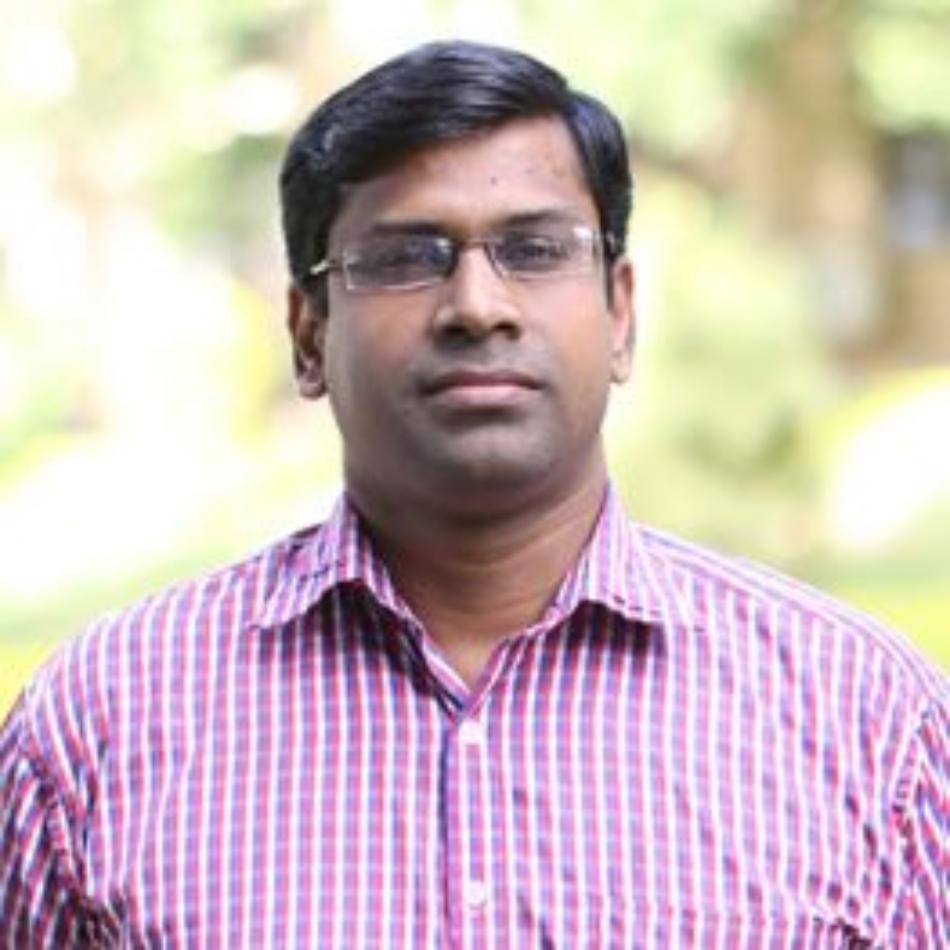
Dr. J. Manikandan
About Dr. J. Manikandan
Dean of Research at PES University, heading the Crucible of Research and Innovation (CORI) and Centre for Research in Space Science and Technology (CRSST). Prior to academia, he served as Scientist ‘B’ & ‘C’ at ADA, DRDO Labs, and Project Trainee at ISRO — bringing nearly 6 years of defence and space industry experience.
He received his B.E. in Electronics and Communication Engineering from Thanthai Periyar Government Institute of Technology (TPGIT), Madras University. He completed his M.E. in Communication Systems and Ph.D. in Pattern Recognition from NIT Trichy. Prior to his Ph.D., he served as Project Trainee at ISRO and as Scientist ‘B’ and ‘C’ at the Aeronautical Development Agency (ADA), DRDO Labs, Bangalore for nearly 6 years.
He has worked on several funded projects and consultancy projects to the tune of ₹1.75 Crore, spanning Artificial Intelligence, Machine Learning, Electronic Nose, Digital Twin, Autonomous Vehicle Technology, Embedded System Design, Reconfigurable Computing, Underwater Wireless Power, Wireless Sensor Networks and more. He has received six Indian patent grants, with five more filed and under examination, and has published 125+ research papers with ~1100 citations.
Qualifications
Awards
Young Engineer Award — Institution of Engineers India (2013)
BITES Best Ph.D. Thesis Award (2015)
IETE Biman Behari Sen Memorial Award (2015)
Best M.Tech Supervisor — ISTE (2021)
Focus areas
Space & Defence Tech
CRSST leads FPGA-based systems for space and reconfigurable computing for naval applications with active ISRO RESPOND projects.
Embedded AI Systems
FPGA and C-based embedded systems integrating ML algorithms — from autonomous vehicle platforms to AI-based sorting machines.
Wireless Power Transfer
Contactless underwater battery charging for naval vehicles and wireless sensor node design, funded by the Naval Research Board.
Electronic Nose
AI-driven electronic nose systems for early fire detection — developed in partnership with ISRO for safety and space applications.